
Toyota Kirloskar Motor on Tuesday said it has lifted the lockout at its Karnataka (Bidadi)-based manufacturing plants.

Firm asks workers to sign undertaking; refuses to revoke suspension of 17.

Toyota Kirloskar Motor (TKM) on Tuesday said the labour strike at its Bidadi-based manufacturing plant in Karnataka has come to an end. In November last year, the automaker had to declare a lockout at the facility following workers' union members resorting to a sit in strike at the factory premises to protest against the suspension of a worker.

Of the 6,400 Toyota employees, about 4,000 are union members and the remaining of them are on contract in both the factories.

Toyota Motor Corp of Japan, had on March 16 declared a lockout.

Production at the maker of Innova and Fortuner has been crippled and it's operating at less than 10 per cent capacity.

Two office-bearers of the Toyota Kirloskar Motor Employees Union and eight other employees are staging the strike. Simultaneously, about 1,000 employees, registered with the TKMEU, staged a dharna at the factory gate from 10 am to 6 pm on Wednesday.

Over 400 Toyota Kirloskar Motor Employees Union members have ended their sit-in protest outside the labour commissioner's office in Bangalore, to pave the way for holding conciliatory talks.

Toyota Kirloskar Employees Union (TKMEU) on Saturday said they were ready to resume work on March 24 but would not sign any undertaking as desired by the company, which has agreed to lift the lock-out at its two plants in Bidadi near Bangalore following government's conciliatory efforts.
Over 1,000 employees affiliated to the Toyota Kirloskar Motor Union on Tuesday resumed work after signing a modified version of the 'good conduct declaration' prepared by the management.
When the workers returned to work for the 6 am shift on Monday morning, the management insisted each employee sign an undertaking, but the workers refused to do so.

The renewed talks between Toyota Kirloskar Motor management and employees union to end the deadlock over labour issues at two plants near Bangalore have failed.
Conciliatory talks between Toyota Kirloskar management and the union on Thursday failed to reach any conclusive stage as the former sought time till January 16 to contemplate the suggestions of the labour department.
Workers' union to hold meeting on Monday to decide when to return to work.

Workers had stopped production lines to protest a delay in salary hikes after 10 months of negotiations.
Bengaluru's manufacturing sector has in the past few years witnessed one of its worst phases, thanks to labour unrest in the region's industrial hub.

This crisis has arisen just as demand in India's auto sector started seeing some sort of revival after the nationwide lockdown in March/April.

Battered by the Covid-19 pandemic, the maker of the Fortuner and Innova models is staring at a steep loss in the ongoing financial year.
.jpg)
Condusive climate across states is crucial for manufacturing growth.
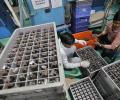
Auto component makers in India are bracing for a tough time. High absenteeism among workers owing to Covid-19, shortages of critical parts, and temporary closures of plants by automobile manufacturers have thrown a spanner in the works for the Rs 3.2-trillion sector, which derives 60 per cent of its revenues from automobile original equipment manufacturers (OEMs), with the balance split equally between replacement demand and exports. Car market leader Maruti Suzuki India on Saturday said it was extending the maintenance shutdown, which was from May 1 to 9, till May 16, "keeping in view the current pandemic situation". Some activities will continue in the plants.

Other players who have declared no production days in the recent past, and during this month, include Mahindra & Mahindra, Maruti Suzuki, Hero MotoCorp, Bosch, Jamna Auto, Wabco and Sundaram-Clayton.

Falling margins, high inflation pitting workers against management.

The biggest worry is not the shrinking of the labour market, but the collapse of good jobs.
 © 2026 Rediff.com - Advertise with us - Disclaimer - Privacy Policy - Sitemap - Feedback - About us - Terms of use - Grievances